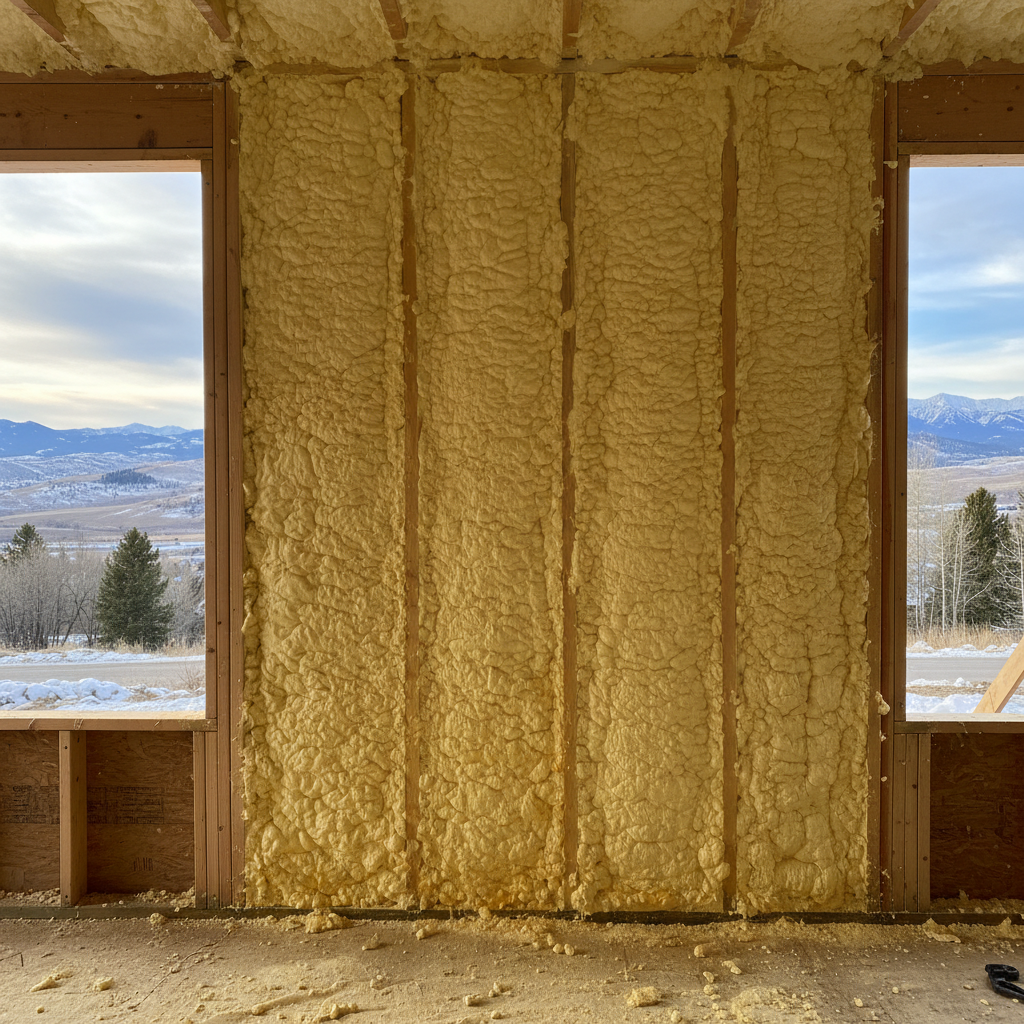
Getting ready to insulate your home with closed-cell spray foam around the Gallatin Valley means dealing with some serious temperature swings and dry, freezing winters. When you are trying to figure out how to approach a spray foam project without wasting money or messing up your building envelope, you have to break it down into realistic phases. Premium Insulation Inc wants you to look at what you can handle yourself and when you absolutely need to bring in a professional crew.
Before the Project Starts: Prep Work You Can Handle
Homeowners can save a chunk of labor costs by doing the pre-project prep work on their own. Before any foam touches your framing, you need complete access to the cavities. Premium Insulation Inc tells homeowners in neighborhoods like the South Side or up near the M-Trail that clearing out old, degraded fiberglass batts and sweeping away construction debris is entirely a do-it-yourself job.
- Tear out old, sagging insulation and haul it away.
- Clear out stored items, shelving, and anything else blocking the walls or rim joists.
- Seal up major air gaps with caulk or rigid foam boards if you are doing a hybrid approach.
- Cover windows, doors, and electrical panels with heavy plastic sheeting and painters tape to catch stray drift.
Do not try to mix or spray the chemicals yourself using tiny do-it-yourself kits from the big box store unless you are doing a tiny patch. The math rarely works out in your favor for whole rooms, and the equipment requires precise temperature management.
During the Application: Why Pros Take Over
When installation day arrives, step back and let the professionals handle the rig. Closed-cell foam relies on a strict chemical reaction between two liquid components that are sensitive to substrate temperatures. If your framing lumber is sitting at freezing temperatures because a Bitterroot cold snap rolled in overnight, the foam will not adhere right or cure to its proper density.
A proper rig maintains precise fluid pressures and temperatures. Certified technicians wear full-face respirators and supplied-air systems because the off-gassing during application is nasty stuff. Once it cures, it is completely inert and safe, but while it is going on the wall, it requires professional safety gear and ventilation containment that you just do not have in your garage.
After the Foam Cures: Trimming and Finishing
A few hours after the application, the foam hardens completely and expands past the face of your studs. This is another area where you can roll up your sleeves and sweat equity the project to save some cash.
You will need a specialized hand saw or an electric serrated knife to slice off the excess foam flush with the wooden studs so you can install drywall later. It creates a massive mess of tiny plastic bits that static electricity clings to like crazy, so having a good shop vac on standby is mandatory. Once the walls are trimmed out, your home thermal envelope will be locked in tight against the Bozeman winter winds, keeping your heating bills from going through the roof.